Case Study

Altruist

Change the economics of independent financial advice.

Financial advice is most valuable before you’re wealthy.

Financial advice is most valuable before you’re wealthy.

Unfortunately, the financial advice industry is largely designed to become economical only after you are.

Independent financial advisors want to serve more people. But the custodians underneath their businesses—including Schwab and Fidelity—were built for another era: paperwork, fragmented systems, manual processes, even faxed signatures.

Every hour spent administering accounts is an hour not spent advising clients. And when every client requires too much administrative labor, advisors are pushed toward an ugly economic equation: fewer clients with more money.

Altruist was built to break it.

Founded in 2018 by former Registered Investment Advisor Jason Wenk, Altruist created a modern custodian exclusively for independent advisors. It digitized everything from starting a firm and opening accounts to managing portfolios and reporting performance.

The company grew rapidly, becoming the third-largest custodian behind Schwab and Fidelity.

But as Altruist prepared for its next stage of growth—and its Series E raise—competing as a faster, more efficient custodian undersold what the company actually made possible. Jason invited COLLINS to help define a larger future for the business.

Our strategic unlock came from looking beyond what advisors did with Altruist to what they did with the time Altruist gave back.

They built better relationships.

When advisors can speak with clients monthly instead of annually, they understand more: new jobs, new children, changing ambitions, unexpected setbacks. Financial advice becomes less episodic and more responsive to actual life.

Altruist wasn’t simply modernizing the infrastructure of financial advice. It was changing the economics of the advisor-client relationship.

Legacy custodians facilitate transactions.

Altruist enables relationships.

We repositioned the company around that larger role, captured in a simple idea:

“The right relationships can build anything.”

The idea gave Altruist a platform expansive enough to connect every relationship its business depends on: between advisor and client, advisor and Altruist, employee and company—and ultimately, people and their financial futures.

We then rebuilt the brand across strategy, identity, voice, product experience and website.

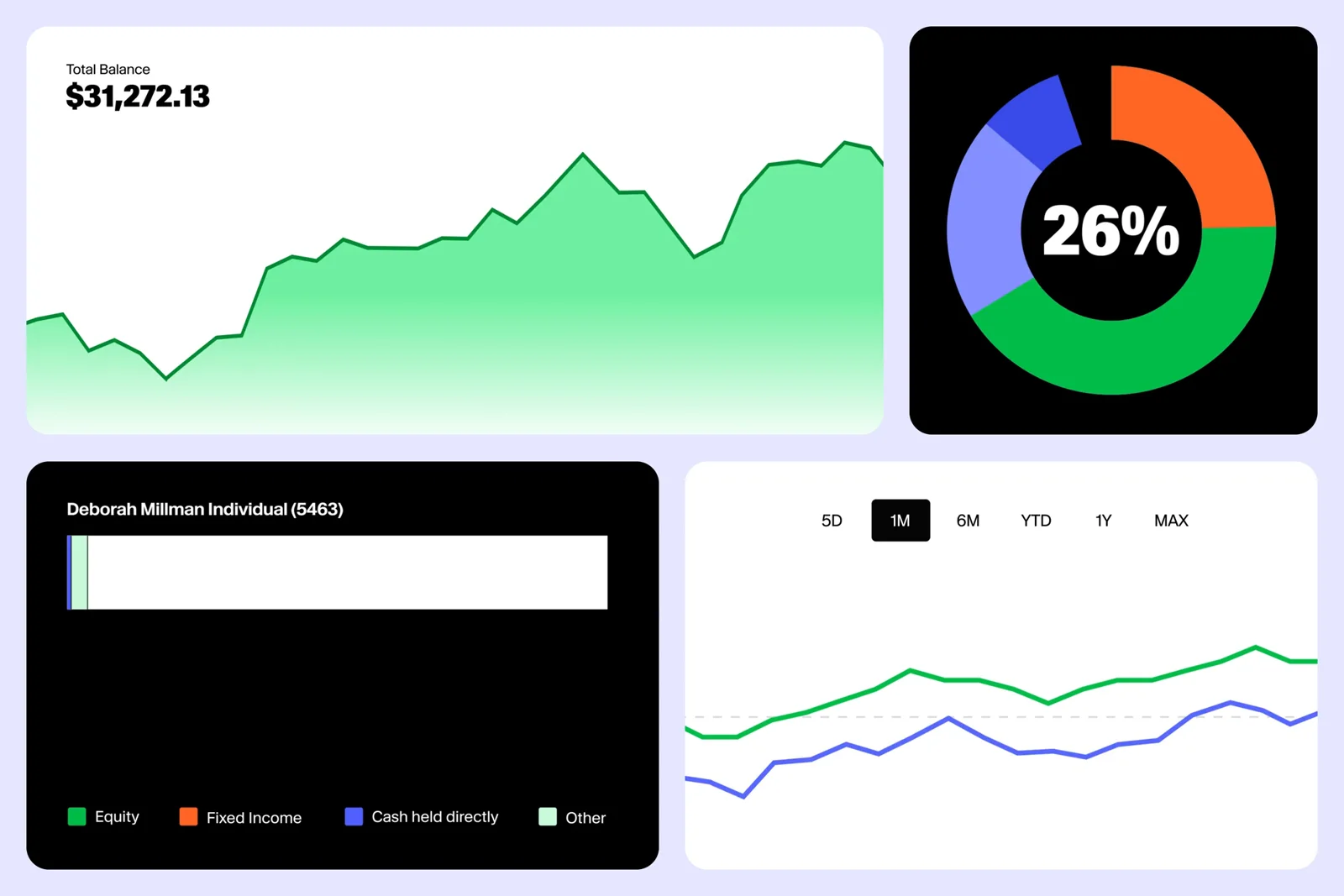
In a category dominated by cold abstraction, painterly illustration brought warmth and humanity. A vibrant approach to data visualization made complexity clear without making it simplistic. Motion, imagery and language transformed finance from a world of transactions and charts into one of connection, progress and possibility.

Together, the system expressed a more valuable equation for Altruist:

Better technology creates more time.
More time creates stronger relationships.
Stronger relationships create better financial outcomes.

Altruist moved from competing on custody technology to advancing a larger ambition for independent financial advice.

The new brand gave the company a platform broad enough to grow beyond what custodians have historically done—and toward what financial advice could become.


COLLINS
Stalyn AlmanzarTom EliaSam EliotTaylor ZahrtEmily SneddonDaniel FerroClaudio SalasRohan RegeOwen OhOlivia CrandallJodi TerwilligerTomas MarkeviciusGonzalo MenevichianKelly KraftSteffi KatzNick Ace
Collaborators
MollyDexter MaurerMr. BronxButter Sound
Altruist
Jason WenkChris HiestandAjaa JacksonEllie KibbeErin RobertWill SteinerStephen KaneDaniel HaireSarah KhoslaWest Vegh

Augments

Augments are add-on components or properties that enhance a design system’s performance. They introduce new capabilities, expand functionality and improve how the system works across contexts.


Augments

Augments are add-on components or properties that enhance a design system’s performance. They introduce new capabilities, expand functionality and improve how the system works across contexts.
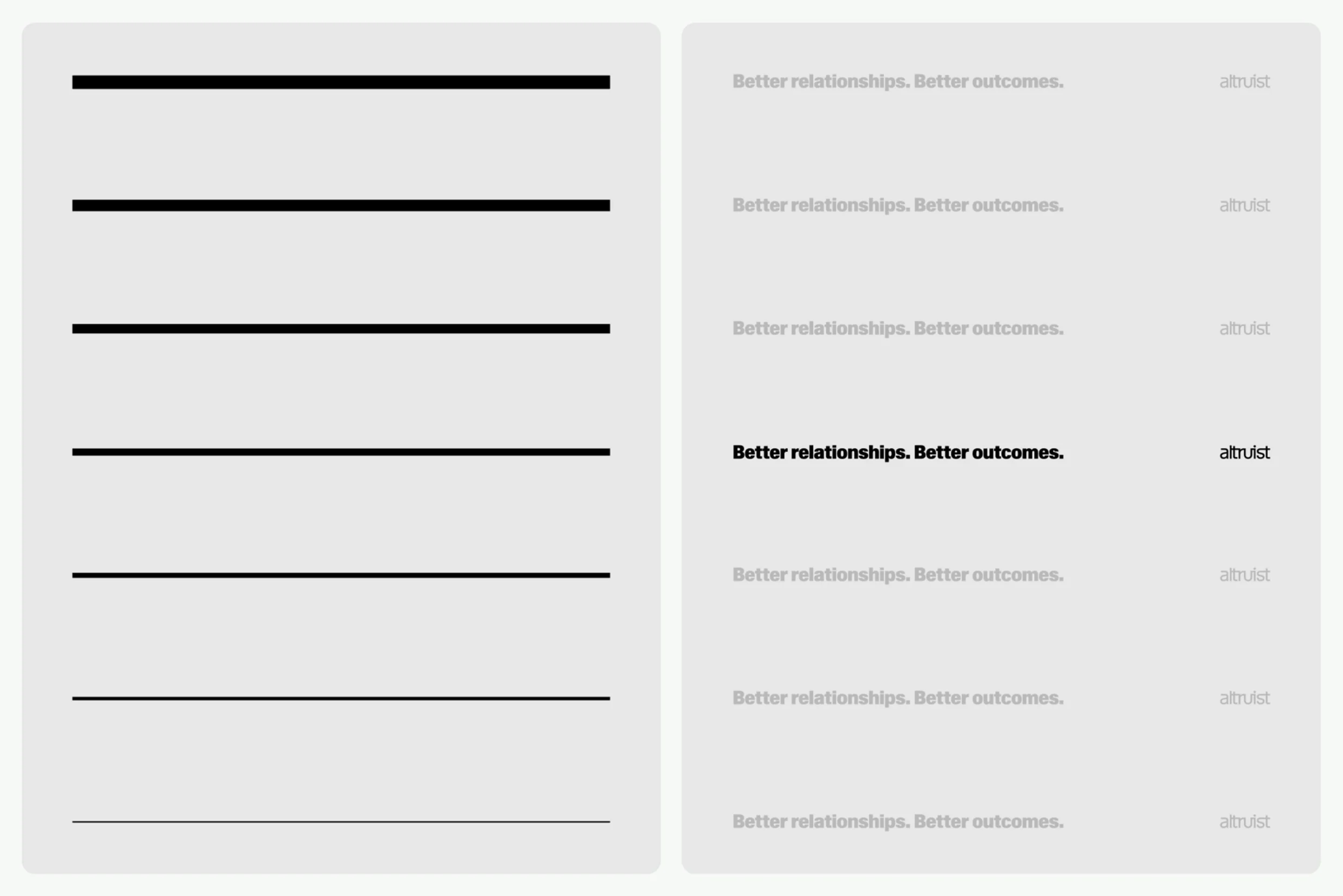
Language Bridge

A logic of function that translates identity components built for marketing communications into elements engineered for product interfaces—and vice versa—recalibrating usability and expressiveness.

Verbal System

A component augment that synchronizes language, tone, and storytelling across all applications. By blending copywriting and UX principles, it ensures the brand voice is consistent, powerful, and resonant across touchpoints.

Grid

A structural system enforcing consistency and adaptability across an enormous decentralized identity system.

High Signal Element

A component augment that establishes a single, powerful visual element—shape, color, or illustration style—designed to cut through clutter and draw attention in visually complex environments.

Impact

Press